
Assisi (null hypothesis)

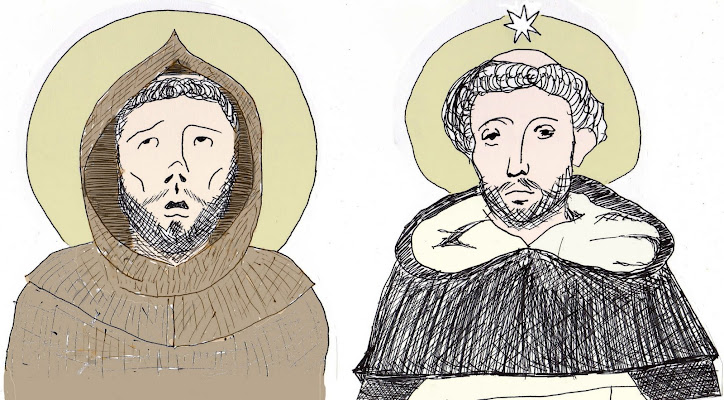
Assisi I, II, et III.
-Pope John XXIII. Veterum Sapientia
Not only is it beautiful, but it is dead. Not being a living language that changes meaning over time is exactly what we need to mean the exact same things Catholics meant 1900 years ago, and what us Catholics will mean in 1900 years.. What else does the Church say about Latin?
While we're learning "where is the bathroom" in 50 languages, my opinion is we should learn the Pater Noster, the Ave Maria, and the Gloria Patri. Also, these two responses should get you started...
Et cum spiritu tuo "eht coom spee-ree-too too-oh" (And with thy spirit.) The response to "Dominus Vobiscum."
Amen "Ah-men" (after prayers. Often the answer to "Per omnia saecula saeculorum.")
There are a few more, but just learn a couple at a time. This way, when we are around people who don't know English, we could be eager to say, "Celebremus in Latinum"(lets celebrate in Latin) and the might respond "Nunc dices es" (now youre talking!) How unifying!


Before the world's astonished view
Arise the life and order new,
Whose sacred laws again renew
The evangelic state.
The rule monastic he reforms,
Unto the law of Christ conforms,
And all the apostolic forms
He holds inviolate.
In raiment coarse and rough-endued,
A cord his only girdle rude,
Scant the measure of his food,
His feet withal unshod.
For poverty alone he yearns,
From earthly things he loathing turns,
The noble Francis money spurns
Despising all for God.
He seeks a place to weep apart,
And mouths in bitterness of heart
Time precious lost, when taking part,
In earthly joys and vain.
Within a mountain-cavern lone
He bides to weep, and lying prone
He prays with many a sigh and groan,
Till calm returns again.
There in that rocky cave's retreat,
Rapt high in contemplation sweet,
The earth (wise judge) spurned neath his feet,
To heaven he aspires.
His flesh by penance is subdued,
Transfigured wholly and renewed:
The Scriptures are his daily food,
Renouncing earth's desires.
Then Seraph-like from heaven's height,
The King of kings appears in sight,
The patriarch, in sore affright,
Beholds the vision dread.
It bears the wounds of Christ, and lo!
While gazing on in speech-less woe,
It marks him, and the stigmas show
Upon his flesh, blood-red.
This body like the Crucified,
Is signed on hands and feet; his side
Transfixed from right to left, and dyed
With crimson streams of blood.
Unto his mind words secret sound,
Things future all in light abound,
Inspired from high, the saint hath found
Their sense, and understood.
Now in those bleeding wounds, behold!
Black nails appear, within, all gold;
Sharp are the points, the pain untold,
Unspeakable the woe.
No instrument of man was brought
To make these wounds- here art did nought,
By nature's band they were not wrought,
Nor cruel mallet-blow.
We pray thee by the cross's sign
Marked on thy flesh, whereby twas thine,
The world, the flesh, the foe ma1ign,
To conquer gloriously.
Take us, O Francis, to thy care,
Shield us from woe, from every snare,
That we thy great reward may share,
In heaven eternally.
O Father holy! Father sweet!
Devoutly we thine aid entreat,
May we and all thy brethren meet
Victorious in the strife.
In virtue's way our footsteps train
And bring us with the saints to reign;
So may thy flock of Minors gain
The joy of endless life.
Sacrosanctum Concilium, 4 December, 1963
54. A suitable place may be allotted to the vernacular in Masses which are celebrated with the people, especially in the readings and "the common prayer," and also, as local conditions may warrant, in those parts which pertain to the people, according to the rules laid down in Article 36 of this Constitution.
Nevertheless care must be taken to ensure that the faithful may also be able to say or sing together in Latin those parts of the Ordinary of the Mass which pertain to them.
